
- All
- Product Name
- Product Keyword
- Product Model
- Product Summary
- Product Description
- Multi Field Search
Views: 0 Author: Site Editor Publish Time: 2026-08-01 Origin: Site


Walking into a surf shop or browsing online stores can feel overwhelming when looking for water apparel. Retailers often mix up terminology, leaving buyers guessing what they actually need. You might grab a top thinking it suits your activity, only to realize later it performs poorly. Choosing the wrong garment creates frustrating experiences during your favorite aquatic activities. A loose top leads to severe chafing during high-movement water sports. Conversely, a highly compressive top feels uncomfortably clingy during casual beach days. This article provides a clear, evidence-based breakdown of construction, fit, and intended use cases for these garments. We will help you select the exact top required for your specific water activity. You will learn exactly how material blends and seam styles dictate overall performance.
Fit: Rash guards feature a compressive, skin-tight fit; swimshirts fit loosely, similar to a standard athletic t-shirt.
Primary Purpose: Rash guards are engineered for athletic abrasion resistance (preventing board rash); swimshirts prioritize casual comfort and UV protection.
Material: Both utilize UPF-rated synthetic blends, but rash guards use heavier spandex ratios and flatlock stitching to withstand high-friction environments.
Decision Rule: Buy a rash guard for surfing, grappling, or intensive swimming. Buy a swimshirt for water parks, pool lounging, or casual beach wear.
Understanding aquatic tops requires looking at their origins. Manufacturers design these garments for distinct user groups. They use different engineering principles for each category. Recognizing these differences helps you make informed choices.
Origin: The Rash Guard originated in the surfing communities of Australia and Hawaii. Surfers needed a solution to a painful problem. Surfboard wax and sand create a harsh, sandpaper-like surface. Paddling requires laying bare skin against this abrasive surface for hours. This repetitive friction causes a painful skin irritation known as "board rash." Surfers developed these tight-fitting tops to serve as a protective barrier.
Construction: Manufacturers build these tops using highly elastic synthetic blends. They incorporate high percentages of spandex or elastane into the fabric. The weave is exceptionally tight. A crucial construction element is flatlock stitching. Standard seams fold fabric inward, creating a raised ridge. Flatlock seams join fabric edges side-by-side. This technique creates a flat surface, eliminating internal friction against your skin during repetitive motions.
Performance: You should expect a second-skin fit. The garment clings tightly to your torso and arms. This compressive design minimizes hydrodynamic drag. It prevents the fabric from catching on equipment. The tight fit ensures the shirt stays perfectly in place during dynamic, active environments.
Origin: This category evolved for sun-conscious beachgoers. Families needed a water-friendly alternative to standard cotton t-shirts. Cotton absorbs heavy amounts of water and offers poor UV protection. The swimshirt emerged to bridge the gap between swimwear and casual apparel.
Construction: These garments feature a much looser drape. They resemble your favorite athletic workout shirt. Manufacturers rely heavily on polyester to construct them. Polyester provides excellent lightweight breathability. The spandex content remains low. You will typically find standard seam construction here, as intense athletic friction is not a concern.
Performance: The primary performance goal is airflow and casual comfort. The looser fit makes putting the shirt on incredibly easy. Taking it off when wet is also effortless. It transitions seamlessly from water activities to land-based lounging. You gain superior sun protection without sacrificing a relaxed aesthetic.
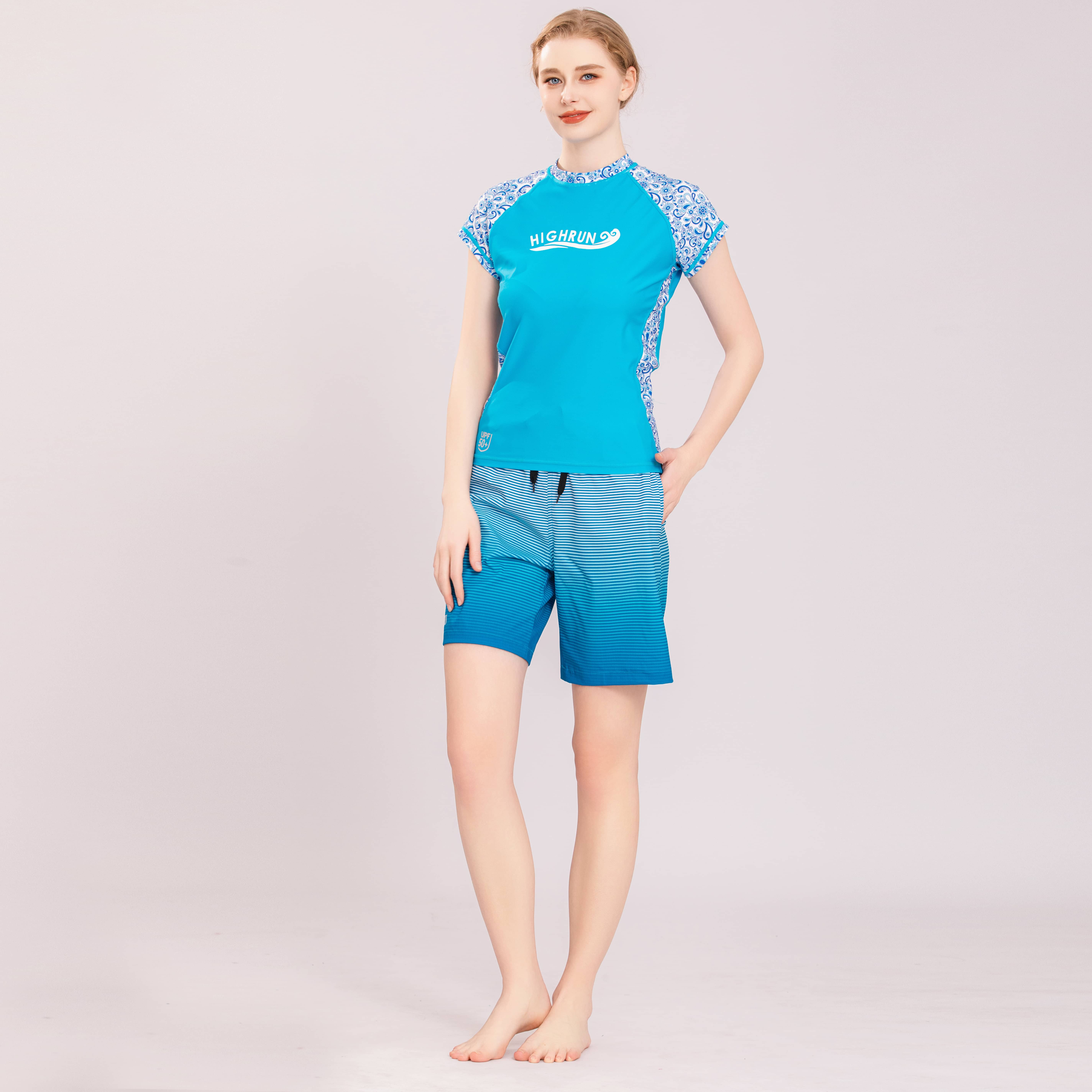
We can separate these two garments by evaluating them across four specific performance metrics. Each dimension highlights how the garment interacts with water, equipment, and sunlight.
Water resistance plays a massive role in aquatic fatigue. Your clothing choices directly impact your energy output.
Rash Guards: They produce virtually zero drag. The compressive fit stops the garment from ballooning underwater. Your body maintains a streamlined profile. Swimmers conserve energy during intense sessions.
Swimshirts: They create high drag. Loose fabric fills up quickly once submerged. This pocket of water creates a parachute effect. You will experience significant resistance. This resistance causes rapid fatigue during lap swimming or when navigating strong currents.
Skin protection goes beyond UV rays. Mechanical friction causes immediate discomfort.
Rash Guards: Designers build them specifically for high-contact friction. They protect against textured surfboards. They shield against rough BJJ mats during grappling. Scuba divers rely on them to prevent heavy BCD straps from digging into their shoulders.
Swimshirts: They provide minimal abrasion resistance. The loose fabric folds over itself easily. If you wear equipment over a loose top, the bunched fabric creates pressure points. These pressure points actually cause chafing rather than preventing it.
Your body handles temperature differently depending on the fabric layer.
Rash Guards: They trap a very thin layer of water against your skin. This mimics the base mechanics of a neoprene wetsuit. Your body heat warms this thin water layer. It provides mild thermal retention in cooler conditions. However, the thick, tightly woven fabric dries slowly once you exit the water.
Swimshirts: They allow water to flush through continuously. They do not trap water for warmth. Their lighter, looser polyester fabrics dry rapidly in the sun. The breeze passes easily through the relaxed fit. This keeps the wearer significantly cooler on land.
Institutions like ARPANSA govern UPF ratings. Understanding how stretch affects UPF is critical.
Shared Feature: Both categories generally offer UPF 50+ protection. This rating blocks roughly 98% of harmful UV rays.
The Stretch Factor: Fabric stretch changes UV transmission. If you over-stretch a poorly sized compression top, the fabric fibers pull apart. Micro-gaps open in the weave. This separation drastically reduces the effective UPF rating. Swimshirts maintain a highly consistent UPF rating because their relaxed drape keeps fibers perfectly intact.
Feature | Rash Guard | Swimshirt |
|---|---|---|
Fit | Compressive, tight | Loose, relaxed |
Drag | Zero drag | High drag |
Drying Time | Slower | Faster |
Friction Defense | Maximum protection | Minimal protection |
Selecting the right top requires analyzing your specific itinerary. Let your primary activity dictate your wardrobe choice.
Opt for high-compression wear when mobility and protection matter most. High-friction environments demand them.
Board Sports: Surfing, bodyboarding, and wakeboarding require constant chest contact. The flatlock seams prevent raw skin.
Scuba Diving & Snorkeling: Wear one under your wetsuit. It makes donning and doffing thick neoprene infinitely easier. It also provides a slight boost to core warmth.
Intense Swimming: Competitive swimming or open-water lap swimming requires efficiency. Drag reduction is absolutely critical for endurance.
Prioritize relaxed options when leisure is the goal. These tops excel in mixed environments.
Beach Leisure: Casual family beach days and poolside lounging. They offer maximum comfort without clinginess.
Amusement Areas: Water parks and lazy rivers involve lots of walking. You need something comfortable for queuing in the sun.
Hybrid Activities: Fishing, boating, or paddleboarding. These activities involve frequent transitions between water immersion and dry land exposure.
Packing for tropical vacations requires versatility. A relaxed top provides incredible value here. You can wear it continuously throughout the day. It looks perfectly natural at a beachside restaurant. A skin-tight compression top feels out of place during lunch. Choose the looser option if you want one garment to serve multiple resort functions.
Do not rely solely on marketing terms. Use this checklist to examine the physical garment before buying.
Look directly for specific UPF 50+ tags. Genuine products display certification labels. Do not assume any synthetic shirt provides adequate UV blockage automatically. Standard polyester shirts might only offer UPF 15. Certified fabrics undergo rigorous laboratory testing to ensure they block UV radiation effectively.
Turn the shirt inside out. Examine the stitching along the ribs and underarms. For athletic use, mandate "flatlock stitching." The seams should lie completely flat against the fabric. Standard raised seams protrude inward. These raised bumps will cause severe underarm chafing after repetitive paddling or swimming motions.
Read the material blend tag. The percentages tell the true story of the garment.
For maximum stretch: Look for 15-25% Spandex or Elastane. This high ratio confirms the garment is a true athletic compression top.
For lightweight breathability: Look for 85-100% Polyester or Nylon. A low spandex count ensures the garment drapes loosely and dries rapidly.
Accept the intended fit. Compression tops are meant to be tight. Some buyers dislike the tight feel. They attempt to buy a compression top and size up twice to make it loose. This is a massive mistake. You immediately lose all hydrodynamic and abrasion benefits. The oversized sleeves will roll up, and the chest will bunch. If you want a loose fit, you should buy a dedicated loose-fit top instead.
The choice between a Rash Guard and a swimshirt comes down to evaluating the intensity of your activity versus your desire for comfort. Both provide excellent sun protection, but they serve vastly different physiological needs in the water.
Here are your action-oriented next steps:
Evaluate your primary water activity honestly before purchasing.
Prioritize compression for friction-heavy, high-mobility sports to eliminate drag and chafing.
Default to a relaxed fit for UV protection during low-intensity leisure and resort wear.
Always check the internal tags for UPF 50+ certification and correct spandex ratios.
A: Often used interchangeably, but "sun shirts" (or UPF hoodies) are usually designed for dry-land activities (hiking, fishing) and may not hold up well to chlorine or saltwater compared to a dedicated swimshirt.
A: Not recommended. Cotton absorbs water, becomes heavy, sags, loses most of its natural UV protection when wet, and degrades quickly in chlorinated pools.
A: They provide very minimal warmth on their own. For cold water, they are best utilized as an anti-chafe base layer beneath a neoprene wetsuit.
A: Like a second skin. It should be snug across the chest, shoulders, and arms without restricting your range of motion or breathing.


