
- All
- Product Name
- Product Keyword
- Product Model
- Product Summary
- Product Description
- Multi Field Search
Views: 0 Author: Site Editor Publish Time: 2026-08-16 Origin: Site


A rash guard is no longer just a basic swim shirt. Today, it represents highly specialized technical apparel. Athletes rely on this gear for essential physical protection. Whether you avoid mat burn on the mats or block UV radiation on the water, buying the wrong specification leads to serious problems. Poor choices cause severe chafing, dangerous overheating, or premature fabric degradation.
Marketing jargon around "cooling tech" and "extreme durability" often obscures what actually matters. Consumers easily get confused by conflicting brand claims. We need strict evaluation criteria to make smart decisions. This guide breaks down the exact material specifications, fit requirements, and use-case criteria you need to evaluate before purchasing. You will learn how to inspect fabrics and analyze seam construction accurately. By following these steps, you ensure you select a garment engineered perfectly for your specific environment.
Fabric dictates function: Polyester-heavy blends resist chlorine and mat abrasion, while Nylon blends offer superior softness and stretch but degrade faster in treated water.
Fit is a safety and performance metric: Compression cuts are mandatory for Brazilian Jiu-Jitsu (BJJ) and competitive surfing; relaxed fits are strictly for casual UV protection.
Construction matters: Flatlock stitching is the only acceptable seam type for true rash guards to prevent severe chafing under pressure.
UPF is temporary: How you wash and size your rash guard directly impacts its long-term sun protection capabilities.
Selecting the correct garment requires understanding your specific physical environment. Different sports subject fabrics to entirely different stress loads. You must match the engineering of the shirt to the demands of your activity.
Combat sports create extreme friction. Athletes constantly drag their bodies across rough tatami mats. This environment introduces significant hazards.
Problem: Grapplers face severe mat burn, staph infection risks, and high sweat transmission between training partners.
Success Metric: You need high-compression fabrics. The garment must feature sublimated graphics to prevent logo peeling. Reinforced stitching remains mandatory to withstand heavy gripping and high-velocity friction.
Loose clothing becomes a hazard on the mats. Fingers easily get caught in baggy fabric. Therefore, a specialized Rash Guard designed for combat sports eliminates these grip points.
Ocean environments test apparel through saltwater exposure and constant abrasion.
Problem: Surfers endure friction from surfboard wax and foam decks. They also face prolonged, severe UV exposure and significant water drag when paddling.
Success Metric: Look for a verified UPF 50+ rating. The garment must include a boardshort-loop (tie-down) at the hem to prevent the shirt from riding up over your ribs. A second-skin fit eliminates water ballooning, keeping you streamlined.
Not everyone needs athletic-grade compression. Casual beachgoers prioritize relaxation.
Problem: Swimmers need sunburn prevention without the discomfort of tight athletic compression.
Success Metric: Choose a relaxed "tee" fit. Prioritize breathable fabric. If you spend time in swimming pools, chlorine-resistant material is an absolute requirement. When packing for family vacations, a Children's rash guard should feature this same relaxed cut to ensure kids stay comfortable and protected all day.
To identify your ideal specification, follow these three steps:
Identify the primary surface you will interact with (mats, wax, or water).
Determine your expected duration of direct sun exposure.
Assess your need for shoulder mobility versus thermal regulation.
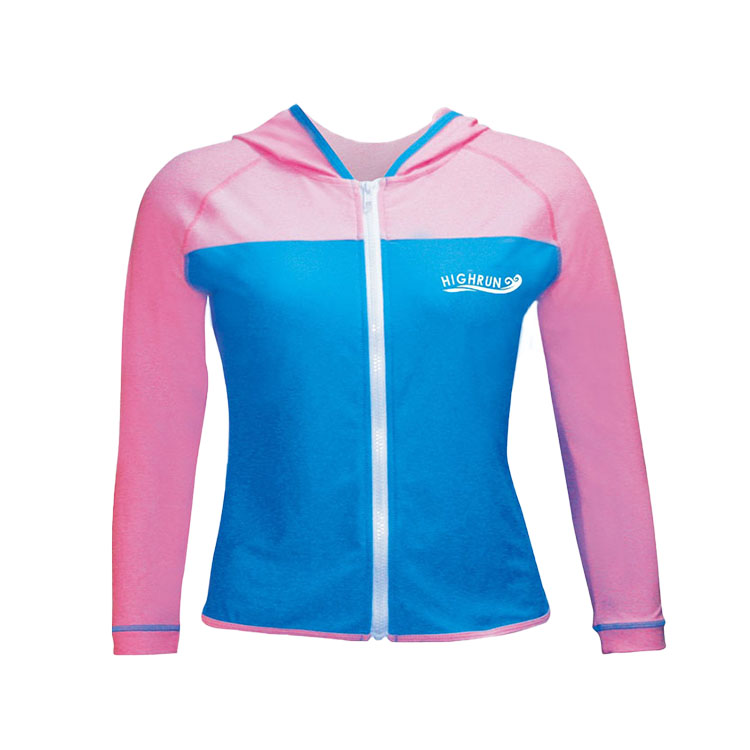
Brand logos tell you nothing about performance. The fabric tag holds the truth. Understanding material science helps you predict how a garment will behave under stress.
Modern technical shirts rely on synthetic blends. The ratio of these fibers determines durability, stretch, and moisture management.
Polyester/Spandex Blends (e.g., 85% Poly / 15% Spandex): Polyester reigns supreme for durability. It resists chlorine exceptionally well. This blend holds its shape after repeated stretching. These properties make it the best choice for BJJ and pool use. However, polyester breathes slightly less effectively than other synthetics.
Nylon/Spandex Blends: Nylon feels incredibly soft against the skin. It feels lighter and dries much faster than polyester. This makes Nylon blends the best option for surfing and open water activities. Unfortunately, Nylon breaks down rapidly in heavily chlorinated pools. The fibers weaken and lose their elasticity.
You must evaluate the stitching before buying. Standard t-shirts use overlock seams. An overlock seam overlaps two pieces of fabric, creating a raised ridge inside the shirt. Under a heavy wetsuit or during a grappling match, this raised ridge will cut into your skin. It causes severe chafing.
Insist on flatlock stitching or welded seams. Flatlock machines sew the fabric edges side-by-side. This creates a completely flat interior profile, ensuring zero-abrasion wear.
Ultraviolet Protection Factor (UPF) ratings are heavily misunderstood. UPF relies entirely on fabric density. The tight weave physically blocks UV rays from reaching your skin. If you buy a shirt sized too small, the fabric stretches transparently across your chest and shoulders. When the fabric pores stretch open, UV rays pass directly through. Consequently, the UPF rating plummets instantly. Always buy the correct size to maintain sun protection.
How a garment drapes across your body impacts your safety and performance. You must choose a cut appropriate for your activity level.
Compression: This cut fits tightly across all muscle groups. It reduces muscle fatigue by minimizing vibration. In martial arts, compression minimizes grab hazards. In the water, it creates zero drag. A true compression fit should feel somewhat restrictive when you first put it on.
Form-Fitting: This cut contours to the body without actively squeezing your muscles. It removes excess fabric bulk. Form-fitting cuts work perfectly as base layers under heavy neoprene wetsuits.
Relaxed: This cut hangs loosely, much like a standard cotton t-shirt. Reserve this style strictly for casual beach wear. A relaxed fit becomes highly dangerous in BJJ, creating finger traps for your partners. It also proves highly annoying for active swimming due to massive water drag.
Anatomical differences dictate seam placement and paneling architecture. A standard Men's rash guard typically features broader shoulder panels and a tapered waist to accommodate upper-body mobility during paddling or grappling.
Conversely, a well-engineered Women's rash guard requires different structural support. You should evaluate the garment for paneling tailored specifically for bust support. Look for anti-ride-up silicone grips placed along the interior hem. Additionally, check the neckline heights. High necklines prevent scoop-neck flushing, stopping heavy surf from pulling the shirt down during wipeouts.
Sleeve length changes the entire thermal and protective profile of the garment. You must base this decision on your environment rather than aesthetics.
Style | Pros | Cons |
|---|---|---|
Long Sleeve |
|
|
Short Sleeve |
|
|
Default to long sleeve models for BJJ and tropical surfing. The added friction defense and UV blocking outweigh minor heat retention. Choose short sleeve models exclusively for under-wetsuit layering or high-heat indoor training where maximum ventilation becomes critical.
Even the most expensive technical apparel degrades rapidly if mishandled. Your maintenance routine dictates the lifespan of the garment.
Elastane (Spandex/Lycra) fibers give the shirt its stretch. These synthetic fibers melt and snap under high heat. Tumble drying your gear or washing it in hot water will permanently destroy the fabric's elasticity. Once the elastane snaps, the shirt becomes permanently baggy. Furthermore, this heat damage ruins the UPF rating.
Best Practice: Always wash your gear in cold water and hang it to dry in the shade.
Synthetic fibers naturally harbor bacteria if left damp. The microscopic structure of polyester traps body oils and sweat deeply within the weave. Evaluate fabrics for factory antimicrobial treatments, especially if buying for BJJ. To prevent permanent odor buildup, strictly enforce a cold-wash and air-dry routine immediately after training. Never leave damp gear sitting in a gym bag overnight.
Avoid buying shirts featuring heavy screen-printed logos on the chest or back. Plastisol ink sits on top of the fabric. During use, this heavy ink will inevitably crack, peel, and stick stubbornly to surfboards or tatami mats. It looks terrible and degrades performance.
Only purchase fully sublimated garments. Sublimation uses heat to turn ink into a gas, baking the color directly into the core of the synthetic fibers. Sublimated graphics never crack, peel, or fade, ensuring the garment remains pristine regardless of friction.
Selecting the right technical apparel requires ignoring the brand logo entirely. Instead, you must look closely at the fabric tag, inspect the seam style, and evaluate the specific cut. The difference between a comfortable session and a miserable one comes down to these precise engineering details.
If purchasing for water sports, prioritize a Nylon blend featuring a boardshort loop. If purchasing for martial arts, prioritize a heavy-weight Polyester blend equipped with flatlock stitching and full graphic sublimation. Determine your primary training environment today. Measure your chest and waist accurately, and buy strictly according to the manufacturer's specific compression chart to ensure maximum performance.
A: No. Standard rash guards offer virtually zero thermal insulation. They are designed for UV protection and friction defense. For warmth, you need a neoprene top or a thermal (fleece-lined) rash guard.
A: For men, no. For women, a sports bra or bikini top is standard, though some modern women's rash guards feature built-in shelf bras.
A: Not recommended. Standard athletic shirts are not woven tightly enough to provide true UPF 50+ protection, and their seams are rarely designed to withstand the high-friction tearing forces of surfing or BJJ.
A: It should fit like a second skin. If there are loose folds of fabric around the torso or sleeves, it is too large and becomes a finger-snag hazard for your training partners.


