
- All
- Product Name
- Product Keyword
- Product Model
- Product Summary
- Product Description
- Multi Field Search
Views: 0 Author: Site Editor Publish Time: 2026-06-29 Origin: Site


Every year, countless boaters head out assuming their vessel is fully prepared for open water. They quickly learn a hard lesson during routine boardings or unexpected emergencies. Carrying approved flotation devices is not just a baseline safety recommendation. It remains a strict legal requirement actively enforced by maritime authorities, including the United States Coast Guard (USCG), and marine insurance carriers. A missing or inadequate vest can end your voyage immediately. It might also void your insurance coverage if an accident occurs.
This guide serves a specific purpose for proactive captains. We aim to move beyond basic compliance and provide a highly practical framework. You will discover how to evaluate, select, and maintain the right life jacket for specific boating environments. We also cover passenger demographics to ensure total safety. Keep reading to master vessel compliance and protect everyone on board.
Compliance is binary: A life jacket only counts toward your legal vessel requirement if it is officially agency-approved (e.g., USCG), the correct size for the intended wearer, and in serviceable condition.
Activity dictates type: The choice between Type I, II, III, and V devices hinges on your vessel type (e.g., canoe vs. offshore powerboat) and distance from immediate rescue.
Wearability vs. Maintenance: Inflatable life jackets offer superior comfort (increasing actual wear rates) but introduce strict maintenance and inspection liabilities compared to inherently buoyant foam jackets.
Liability management: Captains bear the primary legal responsibility for ensuring accessible, compliant flotation devices for every passenger on board.
You cannot negotiate maritime safety laws. Agencies establish universal baselines for a critical reason. You must carry one approved, wearable device for every single person aboard your vessel. Furthermore, regulations mandate that vessels over 16 feet require at least one throwable device. Industry standards categorize this throwable item as a Type IV.
Authorities conduct routine boarding inspections regularly. Failed safety inspections carry severe consequences. Coast Guard officials can demand immediate termination of your voyage. They also issue hefty fines for missing or inadequate gear. You do not want a simple weekend trip ruined by an easily preventable citation.
Let us examine the insurance and liability implications closely. Marine insurance policies require strict adherence to local laws. Non-compliance gives insurers legitimate grounds to deny your claim. They can void coverage entirely if you carry expired or broken safety equipment during an accident. The financial fallout from a denied claim can devastate a boat owner.
As the captain, you hold a non-negotiable legal duty of care. You are personally responsible for passenger safety from the moment they step aboard. A court will intensely scrutinize your safety preparations if an on-water incident occurs. Negligence in providing compliant flotation aids exposes you to massive personal liability.
We must strongly highlight the "serviceable condition" clause. Many boaters mistakenly assume an old, dusty vest remains legally valid forever. It does not. An officially approved device loses its legal status instantly under certain physical conditions.
It fails inspection immediately if it has visible rips or severe fading. Degraded, crushed foam compromises buoyancy and violates the law. You also face compliance failure if your inflatable gear holds an expired CO2 cartridge. Authorities treat compromised gear exactly like missing gear.
You must decode regulatory labels to ensure total compliance. The United States Coast Guard categorizes flotation aids into five distinct classes. We will break down these USCG classifications to clarify your purchasing decisions. Knowing the difference prevents costly procurement mistakes.
Type I (Offshore): These deliver the highest buoyancy available on the consumer market. They reliably turn unconscious wearers face-up in rough, churning water. We recommend them heavily for remote waters. However, they require a bulky storage footprint on your deck.
Type II (Near-Shore): These provide moderate buoyancy. They suit inland day-cruising perfectly. Use them for quick rescue scenarios where help is nearby. They stack relatively easily in standard compartments.
Type III (Flotation Aids): These prioritize high mobility and passenger comfort. They serve as the standard choice for water sports. You will see them often during kayaking and inland operation. They will not automatically turn an unconscious wearer face-up.
Type V (Special Use): These target specific niche activities. Common examples include sailing harnesses and hybrid inflatables. Caveat: A passenger must actively wear a Type V device for it to count toward legal compliance. Simply keeping it in a locker violates the mandate.
Let us summarize these categories in a quick reference chart to aid your evaluation process:
USCG Type | Primary Environment | Buoyancy Level | Face-Up Turning Capability |
|---|---|---|---|
Type I | Offshore / Remote | Highest (22+ lbs) | Excellent for unconscious wearers |
Type II | Near-Shore / Inland | Moderate (15.5+ lbs) | Good, but not guaranteed for all |
Type III | Inland / Calm Waters | Standard (15.5+ lbs) | Poor (wearer must tilt head back) |
Type V | Special Use / Active | Varies widely | Depends heavily on specific design |
Do not ignore the interior fabric label. This printed block contains vital regulatory data. Verify current regulatory stamps before you finalize any purchase. Manufacturers list exact weight limits and chest capacity ratings here. A vest is non-compliant if the wearer exceeds these specified limits.
You will also find intended use warnings. A jacket designed for calm lakes will specifically warn against offshore use. Pay close attention to these explicit parameters. If you ignore the label, you risk severe compliance failures during an official boarding.
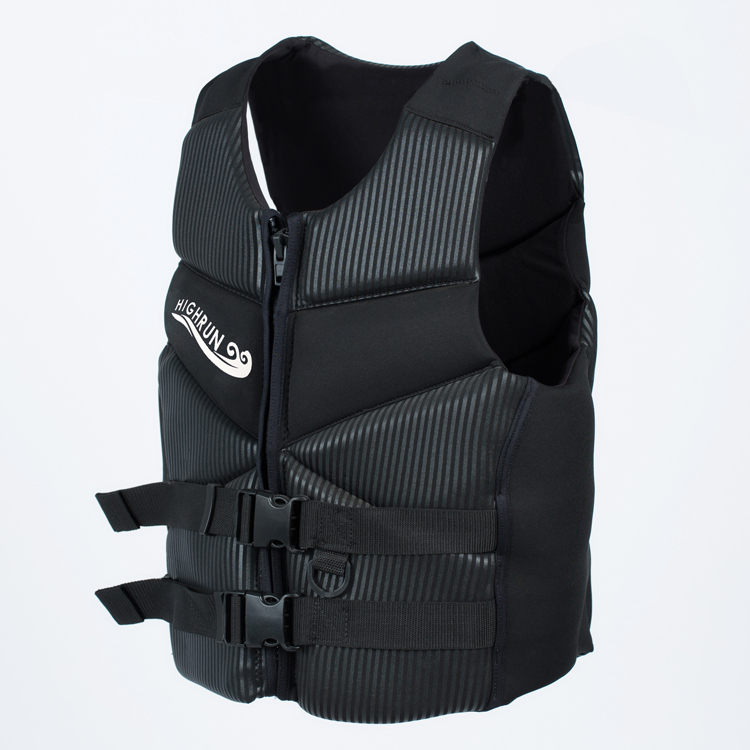
Your chosen vessel dictates your safety equipment strategy. We must align the flotation aid to the specific activity. A narrow kayak requires drastically different gear than a massive offshore cruiser. Contextual application determines operational success.
Offshore runs expose you to unpredictable weather patterns. Rescue teams may take several hours to arrive on scene. You need strict evaluation criteria here. Prioritize high buoyancy options above all else. Select Type I models or premium high-end Type V inflatables.
Visibility is absolutely paramount in open ocean swells. Choose bright, unnatural colors like neon orange or yellow. Ensure the vests feature integrated radar-reflective materials. These crucial elements drastically reduce search times during stressful emergency operations.
Pontoon boats often host large, diverse groups of weekend guests. Your evaluation criteria should center heavily on storage efficiency. You need varied sizing options readily available for different guest passengers.
Standard Type II or Type III foam vests work best here. They stack efficiently inside under-seat deck compartments. They also provide adequate floatation for calm, highly populated lakes. In these popular inland environments, immediate rescue by passing boaters is highly likely.
Paddlers demand continuous, unimpeded upper body movement. Standard bulky vests restrict critical shoulder mechanics. Your evaluation criteria must focus on arm and shoulder mobility. Chafing creates extreme discomfort during long trips.
Look specifically for high-cut backs. These clever designs comfortably accommodate tall kayak seats. They prevent the vest from pushing up aggressively into the paddler's neck. Always choose smooth, snag-free designs to prevent catching on branches or fishing gear.
High-speed impacts change the safety equation completely. Water acts like concrete during a fast, awkward fall. Evaluation criteria must prioritize rigorous impact ratings. You need secure multi-buckle closures to keep the vest firmly attached to the torso.
Use inherently buoyant materials only for these activities. Do not use inflatables for tow sports under any circumstances. Inflatables cannot withstand the harsh, sudden impact forces of a high-speed wakeboard crash. They may rupture upon impact.
Captains frequently debate the merits of modern inflatables versus traditional foam. We must examine the transparent trade-offs of both solution categories objectively. This decision framework will guide your next purchase of Life Jackets to ensure optimal compliance and physical comfort.
Traditional foam designs rely on closed-cell marine materials to provide immediate, reliable lift. They dominate the recreational boating market for good reason.
Pros:
They carry zero deployment risk. They work instantly upon hitting the water.
They require zero maintenance costs over their functional lifespan.
They are universally suitable for all ages, including active children and small infants.
Cons:
They remain notoriously bulky to store in cramped boat lockers.
Foam traps human body heat very quickly.
They often become uncomfortable in high summer heat. This leads directly to lower voluntary wear rates among casual guests.
Inflatables represent a massive, popular leap in wearable marine technology. They utilize compressed CO2 canisters to fill internal bladders. They deploy upon water contact (automatic) or manual cord-pulling.
Pros:
They boast an incredibly slim, lightweight physical profile.
They are highly comfortable in scorching weather conditions.
The minimal design maximizes mobility and encourages continuous all-day wear.
Cons/Risks:
They introduce severe operational liabilities if neglected.
They require strict, documented maintenance schedules. You must perform regular CO2 cylinder replacement and routine bobbin checks.
They become entirely useless if mechanically disabled or punctured.
Regulations legally restrict their use. Children under 16 cannot wear them. They are also strictly illegal for high-impact tow sports.
We recommend a practical hybrid approach. Maintain a generous baseline inventory of inherently buoyant jackets. Use these reliable foam models for casual guests and children. Simultaneously, invest in premium inflatables for yourself and frequent, experienced crew members. This strategy perfectly balances upfront costs against long-term operational comfort.
You cannot just buy a stack of vests and throw them randomly in a hatch. Successful implementation demands careful, deliberate planning. Sizing, storage protocols, and lifecycle management directly impact your legal liability and passenger survival rates.
Purchasing "one-size-fits-all" gear creates a critical, dangerous liability. An oversized vest will slip violently over a victim's head upon water entry. Conversely, an undersized vest cannot provide sufficient lift to keep a heavy adult afloat. You must establish a diverse, comprehensive sizing matrix.
An appropriately fitted Adult's Life Jacket will definitely not protect a toddler. Address specific considerations for infant, child, and youth weight classes. Pediatric models require mandatory crotch straps. These straps physically prevent the child from falling through the bottom. They must also feature robust head support collars to keep a tired child's face above water.
Maritime law mandates a very specific, inflexible condition. Safety equipment must remain "readily accessible" at all times. We see many inexperienced captains make a critical error here. They keep brand new gear locked tightly below deck.
Worse, they leave the vests sealed in their original plastic packaging to prevent dirt accumulation. This constitutes a direct, citeable legal violation. Coast Guard officers will issue a citation immediately for wrapped gear. In a chaotic emergency, no one has the time or fine motor skills to tear open thick plastic. Keep them unbagged, untied, and easily reachable.
Harsh saltwater, intense sun, and damp storage destroy safety equipment surprisingly quickly. You must implement robust lifecycle management practices. Follow these strict steps to preserve your investment:
Winterization: Clean them thoroughly with mild soap and fresh water. This ensures proper mold and mildew prevention.
UV Protection: Store them in dry, dark areas. Ultraviolet rays degrade synthetic fabric bindings rapidly.
Compression Checks: Regularly inspect the internal foam panels. Identify when foam compression necessitates immediate replacement. If the material feels crushed, dense, or brittle, throw it away.
Hardware Audits: Test every zipper and plastic buckle. A broken buckle renders the device non-compliant.
Investing in approved safety equipment transcends basic maritime law. It acts as both a non-negotiable regulatory mandate and an operational necessity for robust risk management. You hold the ultimate responsibility for every life aboard your vessel.
Take decisive action before your next voyage. First, audit your current onboard inventory thoroughly. Second, immediately discard any compromised, faded, or torn units without hesitation. Third, purchase application-specific replacements tailored perfectly to your vessel's primary operating environment. Never compromise on proper sizing protocols or accessible storage practices. Your diligent preparation guarantees a safer, legally compliant experience on the water for everyone involved.
A: Foam jackets do not have hard expiration dates printed on them. Instead, they expire conditionally based on physical degradation. If the foam compresses, the fabric rips, or the colors fade significantly, it loses its approved status. In contrast, inflatable components like CO2 cartridges and dissolving bobbins do feature strict, printed expiration dates. You must replace these specific parts on schedule.
A: No. Maritime law strictly requires safety equipment to be "readily accessible" at all times. Keeping them locked away or wrapped in original commercial plastic packaging constitutes a direct legal violation. In a sudden emergency, passengers lack the time to tear through thick plastic. Boarding officers routinely issue citations for bagged gear.
A: Pet personal flotation devices are highly recommended for overall safety. However, they are not regulated or approved by the USCG. A canine vest does not count toward your vessel's mandatory passenger requirements. You must still carry enough human-rated, officially approved devices for every person on board.
A: Usually, no. This presents a crucial compliance caveat. Most Type V inflatables specifically state on their interior warning labels that they must be physically worn to count toward the vessel's legal minimum inventory. If a Type V device simply sits in a storage locker, it completely fails to fulfill your statutory requirement.


