
- All
- Product Name
- Product Keyword
- Product Model
- Product Summary
- Product Description
- Multi Field Search
Views: 0 Author: Site Editor Publish Time: 2026-06-26 Origin: Site


A Life Jacket only works if it stays securely attached to your body during an impact or sudden immersion. Comfort and safety are never mutually exclusive. They both depend entirely on finding the precise fit. Many buyers mistakenly use everyday clothing sizes or body weight to select an Adult Life Jacket. This dangerous assumption leads to critical gear failures in the water. An oversized jacket rides up over your face, while a loose vest slips off entirely. Poor fitting can even restrict breathing when you need air the most. This article provides a definitive, evidence-based methodology for finding your ideal Adult Life Jacket Size. You will learn the exact way to measure your torso, how to perform physical safety tests, and ways to verify compliance with USCG regulations. By mastering these steps, you ensure optimal safety and performance on the water.
Chest size dictates adult fit: Unlike children's PFDs (Personal Flotation Devices), which are categorized by weight, adult life jacket size is determined by chest circumference.
The bottom-up tightening rule: Proper fitting requires starting with all straps loose, zipping up, and tightening from the lowest strap upward.
The "Touchdown Test" is non-negotiable: If the jacket rides up past your chin or ears when pulled by the shoulders, it is too large and unsafe.
Activity dictates design: The right fit varies by activity; kayakers need high-back clearance, while wakeboarders require high-impact, snug-fitting designs.
Adults already possess natural buoyancy. Human lungs hold a significant volume of air, and adult bodies carry a different density compared to small children. Weight serves as the primary sizing metric for youth and infant jackets simply because children have not yet developed proportional chest cavities. For a fully grown adult, your overall scale measurement is practically irrelevant to your safety gear. Instead, marine safety experts use chest circumference as the absolute standard.
Manufacturers engineer the internal foam panels of a life jacket to securely wrap the human torso. If you buy a personal flotation device using your standard t-shirt size, you often end up wearing a dangerously loose garment. The chest dimension determines exactly how the protective foam hugs your ribcage. A heavily built adult with a broad barrel chest needs a vastly different vest than a tall, slender adult who weighs the exact same amount.
Let us evaluate unisex versus gender-specific fits. Unisex designs usually cater to a standard male torso. They feature longer body panels and wider shoulder sections. Women often struggle with unisex options on the water. The jacket pushes up against the chin when sitting in a boat or kayak. Women-specific PFDs solve this exact problem efficiently. Designers incorporate princess seams, contoured chest panels, and significantly shorter torso lengths. These structural modifications prevent the vest from riding up. They accommodate curves without compromising the protective foam distribution. Choosing a gender-specific model often provides a much safer and less abrasive experience.
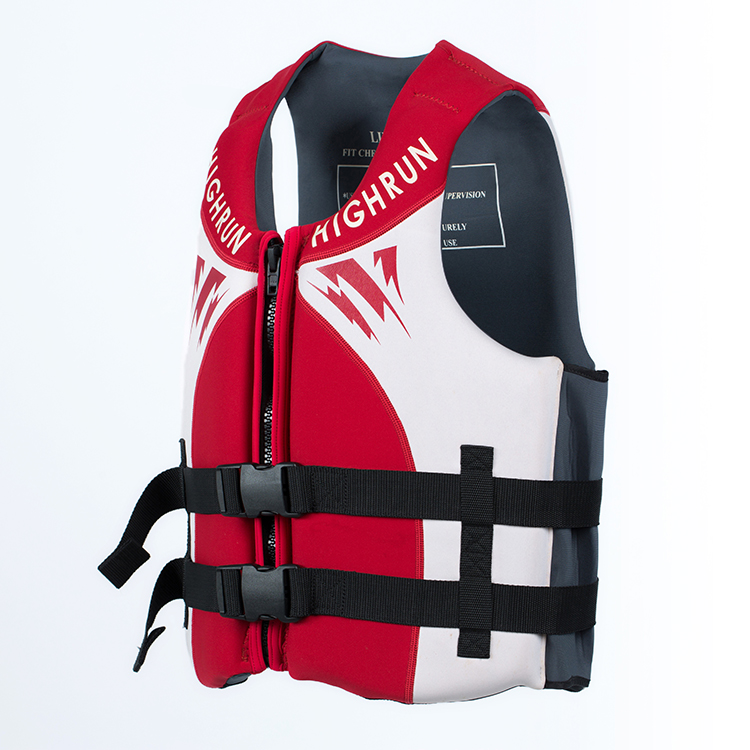
Finding the ideal Adult Life Jacket Size begins with an accurate baseline measurement. You cannot guess your dimensions or rely on tailor measurements taken years ago. You need real-time data before making a purchase.
Tools Required: You need a flexible cloth tape measure. This is the exact tool used by tailors. If you do not have one, grab a long piece of non-stretch string and a standard metal tape measure. You can wrap the string around your body, pinch the mark, and then measure the string length flat on a table.
Step-by-Step Measurement Methodology:
Stand up straight in a relaxed posture. Keep your arms resting naturally at your sides. Ask a friend to help you measure, as raising your own arms alters your chest shape.
Wrap the tape measure around the broadest part of your chest. For most adults, this area is located directly under the armpits and across the prominent part of the shoulder blades.
Keep the measuring tape completely parallel to the floor. Do not let it sag in the back.
Do not inhale deeply or hold your breath. Take the measurement while holding a natural resting posture to ensure real-world accuracy.
Factoring in Layering: Consider your marine environment before finalizing your numbers. What will you wear on the water? Advise buyers to add one to two inches to their baseline measurement if they plan to wear bulky layers. Wetsuits, thick drysuits, or heavy cold-weather boating jackets consume critical space. If you only boat in warm summer weather wearing a swimsuit, stick strictly to your bare-skin measurement. If you switch frequently between summer and winter boating, you may actually need two different jackets to maintain a safe fit year-round.
Best Practice: Always measure twice to confirm your numbers. Record the number in both inches and centimeters, as international brands use different sizing charts.
Common Mistake: Puffing out your chest artificially. This leads to buying a jacket that feels suffocating when you actually sit down and relax your torso.
An accurate chest measurement is only the first phase of water safety. An expertly sized Adult Life Jacket will still fail if you secure it incorrectly. People often put on a jacket and yank the nearest shoulder strap first. This creates uneven tension and misaligns the internal foam panels.
Step 1: The Reset. Before putting the PFD on your body, loosen every single strap. Open the buckles completely. Put your arms through the armholes, then zip the front enclosure all the way to the top. If the zipper struggles to close at the base, the jacket is too small.
Step 2: The Bottom-Up Sequence. You must anchor the jacket to your waist. Secure the lowest strap first. This strap usually sits around the waist or lower rib cage. Pull it snug. Work your way upward. Tighten each horizontal strap symmetrically so the jacket does not pull heavily to one side. Finish the sequence by adjusting the shoulder straps last. Pulling shoulder straps first ruins the fit entirely.
Step 3: The "Touchdown Test" (Verification). This physical test validates your fit. It is completely non-negotiable. Raise both arms straight overhead. Imagine signaling a touchdown in a football game. Have a partner pull firmly upward on the shoulder straps.
Success Criteria: The jacket should stay firmly in place. It must not move above your chin or ears. If the shoulder panels touch your ears, the jacket is definitively too large. You must downsize or completely readjust your anchor straps.
Below is a diagnostic chart to help you verify your fit quickly:
Fit Characteristic | Proper Fit Indicators | Improper Fit Indicators |
|---|---|---|
Strap Tension | Snug against the ribs but allows full, deep breaths. | Loose gaps visible, or too tight to expand your lungs. |
Armhole Clearance | Free rotation of shoulders, no severe chafing against skin. | Restricts arm movement, severe rubbing in the armpits. |
Touchdown Test | Jacket remains anchored safely below the chin line. | Jacket rides up aggressively over the face or ears. |
Torso Length | Sits comfortably just above the natural waistline. | Pushes up violently into the neck when seated in a boat. |
The concept of the "right fit" changes dramatically depending on your environment. Water activities demand distinctly different ranges of motion. They also present varying impact risks. You must match your jacket style directly to your specific aquatic scenario.
Paddlesports (Kayaking, Canoeing, SUP): Paddlers need exceptional rotational mobility. Look for designs featuring extremely large armholes. High-back clearance is crucial for kayakers. Kayaks utilize tall, supportive seats. A standard vest will hit the rigid seatback and push the collar violently up your neck. High-back designs concentrate the flotation foam above the seat line. This keeps the jacket anchored properly while you paddle long distances.
Tow Sports (Wakeboarding, Waterskiing): Falling at thirty miles per hour feels exactly like hitting concrete. Tow sports require a highly snug, low-profile fit. You need heavy-duty buckles and robust zippers. These features withstand high-speed water impacts without tearing open. The jacket must grip your torso tightly to prevent internal injury during a sudden, high-speed crash.
Offshore/Open Water Boating: Far from shore, a professional rescue takes considerable time. You need maximum buoyancy. Offshore jackets are inherently bulkier. The fit focuses heavily on head-turning clearance and keeping an unconscious wearer securely face-up. They also provide essential thermal protection against cold open water. Fit testing here prioritizes layering heavily over winter survival gear.
A well-fitting jacket is only legally valid if it carries proper certification for your region. Regulatory bodies test marine safety gear rigorously before it ever hits retail shelves.
Reading the Label: The maritime industry recently transitioned its classification system. In the past, you saw legacy USCG Types printed on labels. These included familiar Type I, Type II, and Type III categories. The market now uses a new harmonized, icon-based performance system. You will see labels indicating Level 50, Level 70, Level 100, and Level 150. These numerical values represent the exact buoyancy level measured in Newtons. Level 70 currently replaces the old Type III standard for everyday inshore recreational boating.
Legal Requirements: Law enforcement officers actively patrol public waterways. They routinely check vessels for mandatory safety gear. They look specifically for the official USCG approval stamp. However, a stamp alone does not save you from a ticket. The USCG strictly dictates the jacket must be appropriately sized for the wearer. If a tiny adult wears an extra-large vest, the officer can issue a hefty citation. A poorly fitted Life Jacket is deemed legally unserviceable for that specific passenger. It is your personal responsibility as a boater to verify both the official stamp and the physical fit before leaving the dock.
Finding the perfect fit is a mandatory step for water survival. Do not skip the fitting process. Keep these critical takeaways in mind:
Measuring your true chest circumference stands as the first pillar of finding the correct size.
Passing the physical Touchdown Test acts as the ultimate verification of a secure fit.
Always prioritize securing your straps from the bottom up to properly anchor the vest.
Never rely on your body weight or everyday t-shirt size when buying gear for an adult.
Take action before your next trip. Grab a tape measure immediately and record your dimensions. Consult the specific brand sizing charts, as measurements easily vary between different manufacturers. Do not settle for a "good enough" fit when your life depends entirely on your gear functioning correctly.
A: Always size down. A Life Jacket will expand slightly when submerged. Foam compresses under water pressure, and synthetic materials relax. A loose jacket acts as a severe drowning hazard. It will slip off during an impact or ride up over your airway when floating.
A: Neoprene jackets may relax slightly when wet because they conform closely to your body heat. However, traditional nylon and foam jackets do not stretch over time. You must always assess the initial fit based entirely on its completely dry state.
A: No. If the straps are maxed out and the jacket still moves during the Touchdown Test, the armholes and neck opening are too large to safely keep your head above water. You risk slipping straight through the bottom during a sudden fall.


