
- All
- Product Name
- Product Keyword
- Product Model
- Product Summary
- Product Description
- Multi Field Search
Views: 0 Author: Site Editor Publish Time: 2026-09-16 Origin: Site


Paddle sports like stand-up paddleboarding (SUP), kayaking, and canoeing present a unique safety challenge for enthusiasts. You must balance strict USCG-compliant safety regulations while maintaining completely unhindered stroke mechanics. Standard boating vests often fail this test miserably. They tend to chafe sensitive skin aggressively. They awkwardly ride up your torso. They heavily restrict your shoulder rotation during continuous paddling sessions. This forces many paddlers to choose between their physical comfort and their survival. Fortunately, you no longer have to compromise on the water. You can utilize a specially designed neoprene life vest for paddle sports as a purpose-built solution. This specialized gear perfectly bridges the gap between active mobility, reliable inherent buoyancy, and long-session comfort. Throughout this guide, we will explore the biomechanical demands of paddling. We will dive into advanced material science. We will show you exactly how to select the ideal flotation device for your next aquatic adventure.
Mobility is Safety: A proper paddle sports life vest features oversized armholes and segmented foam to allow a full range of shoulder motion without chafing.
Material Synergy: Premium vests combine a flexible neoprene outer shell with an inner EPE foam core to provide high buoyancy without the bulk.
Dialed-in Fit: An adjustable life vest prevents the safety device from riding up into the paddler's chin during immersion or seated paddling.
Regulatory Compliance: Selecting a USCG Type III approved vest ensures legally compliant, reliable flotation for inland and near-shore water sports.
Stand-up paddleboarding and kayaking demand rigorous, continuous upper body movement. You are constantly twisting your core. You repeatedly execute high-angle paddle strokes to propel yourself forward across the water. A standard, bulky marine vest aggressively impedes this natural kinetic chain. When you reach forward for a paddle catch, stiff materials block your shoulders. This interference wastes your energy. It forces you to alter your natural technique.
To understand the biomechanical requirements, consider these three critical movement factors:
Continuous Upper Body Rotation: Efficient paddling generates power from your core. You twist your torso from side to side thousands of times per hour. Your vest must flex alongside your ribs rather than fighting against them.
High-Angle Extension: Kayakers often use high-angle strokes for speed and maneuverability. This requires lifting your elbows well above your shoulders. Standard vests crash into your armpits and stop this motion entirely.
Dynamic Balance Adjustments: SUP riders constantly shift their weight to accommodate waves and wind. Rigid jackets restrict your ability to lean and counter-balance effectively.
We must also address intense friction and chafing risks. Repetitive motion naturally creates hot spots around your armpits and your neck. Material softness becomes a vital performance metric for any safety device. If a vest rubs your skin raw, you will eventually stop wearing it entirely. Proper paddle sports life vest designs prioritize skin-friendly borders. They utilize rolled edges to eliminate harsh nylon seams.
Finally, your center of gravity dictates your stability. You need a low-profile fit. This keeps your center of gravity stable and centered over your craft. Stability remains especially crucial on a stand-up paddleboard. Any sudden shift in top-heavy weight can easily throw you off balance. By keeping the foam distributed thinly across your chest and back, you maintain your natural athletic posture.
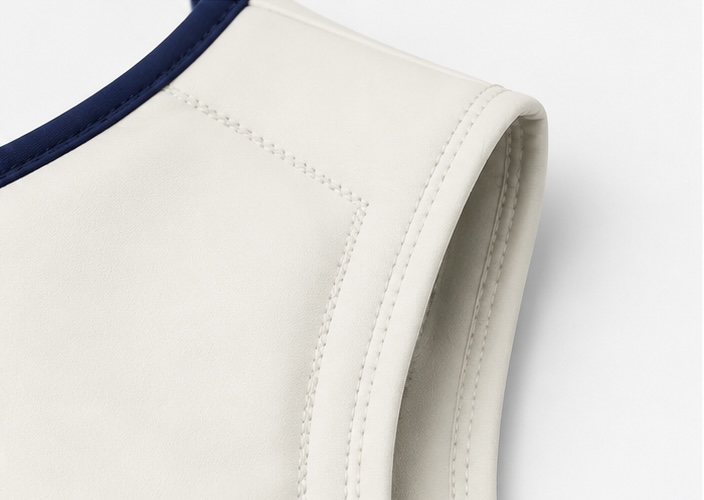
Material selection heavily influences your experience on the water. For decades, manufacturers relied on stiff nylon fabrics to house flotation foam. Today, specialized synthetic rubbers dominate the high-performance market. Let us examine exactly why this material science matters for dedicated paddlers.
Form-Fitting Flexibility: Neoprene contours precisely to your body's natural shape. It completely eliminates the "boxy" fit found in traditional nylon shells. This stretchability means the vest moves when you move. It acts almost like a second skin. You barely notice you are wearing a neoprene life vest once you hit the water.
Strategic Thermal Regulation: People often assume synthetic rubber is far too hot for summer wear. This is a common misconception. Modern designs expertly utilize strategic mesh paneling to combat heat buildup. They create a highly effective breathable life vest. This smart ventilation manages your core temperature during intense physical exertion.
Exceptional Durability and UV Resistance: Basic fabrics quickly degrade in harsh marine environments. Neoprene offers incredible inherent resistance to saltwater degradation. It easily withstands relentless sun exposure without turning brittle. It handles the elements much better over time.
We must understand the buoyancy core concept. The outer synthetic rubber merely serves as the exterior shell. The crucial lift comes from the interior components. Manufacturers combine this stretchy exterior with highly segmented internal panels. This creates an incredibly efficient EPE foam life vest. The closed-cell expanded polyethylene provides immense buoyancy without adding unnecessary bulk.
Best Practice: Always rinse your gear thoroughly using fresh water after every ocean session. Salt crystals can accumulate inside the zipper teeth and fabric pores. Fresh water washing preserves the material's elasticity for many years.
You cannot grab any random flotation device off a store shelf. You need specific features tailored to human-powered watercraft. Knowing exactly what to evaluate saves you money and ensures your safety.
First, examine the armhole cut and overall profile. You must look for deep-cut, oversized armholes. Industry experts often refer to this specific shape as an "active cut." This specialized profile clears your lats and shoulders entirely. It ensures zero material interference during a full forward rotation stroke.
Multi-point adjustability is absolutely non-negotiable. An adjustable life vest must feature robust side and shoulder straps. These straps secure the fabric tightly against your lower ribcage. Proper tension prevents the dreaded "ride-up" when you fall into the water. If a vest floats up around your ears, it impairs your vision and restricts your breathing.
You must also consider the weight-to-buoyancy ratio. Upper body fatigue sets in very quickly over long paddling distances. A properly engineered lightweight PFD reduces physical exhaustion while keeping you exceptionally safe. You typically want to aim for 15.5 to 22.5 lbs of buoyant force. This range fully depends on your exact user weight and body type.
Assess your functional need for low-profile storage. You might need to carry a safety whistle, a marine VHF radio, or a Personal Locator Beacon (PLB). However, storage must never interfere with re-entry onto a board. Bulky front pockets make climbing back onto a SUP nearly impossible.
Table: Core Evaluation Metrics for Paddle Sports PFDs
Evaluation Metric | Ideal Standard for Paddlers | Why It Matters |
|---|---|---|
Armhole Cut | Deep, oversized "Active Cut" | Prevents chafing and allows unrestricted high-angle paddle strokes. |
Adjustability | Minimum 4-6 adjustment points | Locks the vest below the ribcage to prevent dangerous ride-up in water. |
Foam Type | Segmented EPE (Closed-Cell) | Provides maximum buoyancy while molding to the torso flexibly. |
Pocket Profile | Flat, recessed, or minimal | Allows smooth, snag-free self-rescue and board re-entry. |
Safety regulations exist to save lives. Understanding these classifications helps you choose the right gear for your specific waterway environment.
Type III Personal Flotation Devices (Flotation Aids) remain the absolute gold standard for paddle sports. They offer excellent inherent buoyancy. They are uniquely comfortable for continuous daily wear. Engineers specifically design them for conscious users navigating calm or near-shore water conditions. A Type III device allows you to place yourself in a face-up position easily after a fall. Because they are so comfortable, paddlers actually wear them rather than strapping them to the deck.
Let us briefly contrast a synthetic rubber inherent vest against inflatable belt packs. Inflatable belts require manual deployment. You must physically pull a jerk-cord to inflate the CO2 bladder. Then, you must pull the inflated bladder over your head while treading water. Inherent vests require zero deployment steps. They offer instant, fail-safe protection. This automatic buoyancy proves incredibly critical in turbulent water. It also saves your life during an unexpected head-strike where you might lose consciousness.
Common Mistake: Many beginners assume all water-skiing or impact vests are USCG-approved. They are not. Always check the inside label for official certification before trusting a vest for open-water paddling.
Whether you buy one vest for yourself or hundreds for a rental fleet, sourcing matters. Safety gear requires strict oversight and precise engineering. You cannot afford manufacturing defects when lives are on the line.
A credible life vest manufacturer must always provide documented proof of compliance. Look for explicit USCG, ISO, or CE certifications printed directly on the product tags. Never compromise on these certified safety standards. True manufacturers subject their products to rigorous third-party testing to verify buoyancy ratings and material strength.
You should physically evaluate the construction tolerances. Check for heavy-duty YKK zippers. Inspect the seams for reinforced stress-point stitching. The industry commonly calls this bartacking. Examine the segmented foam molding techniques used inside the shell. High-quality construction guarantees long-term survival in harsh marine environments. Cheap zippers will quickly corrode in saltwater. Poor stitching will burst under the strain of a heavy water rescue.
Supply chain transparency remains crucial for commercial operators. Fleet buyers and commercial retailers face different challenges than solo paddlers. You must look for consistent manufacturing processes. Consistent EPE foam density ensures reliable buoyancy. Predictable material elasticity across production batches ensures every customer receives identical protection. Quality control matters immensely when outfitting a large commercial rental operation or guided tour company.
Evaluating a paddle sports flotation device requires a thoughtful approach. You must prioritize stroke freedom alongside certified, reliable safety. An uncomfortable vest quickly becomes a dangerous vest if you refuse to wear it. By understanding the biomechanical needs of your sport, you can confidently select gear tailored to your exact movements.
Here are your action-oriented next steps:
Prioritize snug-fitting, segmented designs featuring deep armholes.
Ensure your selection explicitly meets your local waterway regulations and carries official certifications.
Always measure your chest size accurately before ordering to guarantee a secure, non-riding fit.
If you operate a fleet, contact a certified manufacturer directly to discuss bulk outfitting needs and consistent batch quality.
Do not let bulky, outdated safety gear hold back your paddling performance. Invest in specialized equipment. Stay safe, paddle comfortably, and enjoy your time on the water.
A: No. Modern designs incorporate strategic mesh paneling and breathable inner liners to actively mitigate heat retention. The segmented foam allows air to circulate against your body. For extreme heat, selecting open-sided styles provides even more cross-ventilation while still maintaining strict safety standards.
A: You must be very careful. Many wakeboarding garments act strictly as impact vests. They often lack official USCG approval for inherent flotation. Always check the interior label. You need a certified Type III flotation device, not just an impact-absorbing shell, to remain legally compliant.
A: You should use the "pull-up" test. Fasten all straps tightly starting from the waist up. Have someone stand behind you and pull up firmly on the shoulder straps. They should not be able to lift the vest past your ears or chin. It must stay locked securely below your ribcage.
A: Actually, they are remarkably light. Closed-cell expanded polyethylene (EPE) foam serves as a core component of high-quality, lightweight safety gear. The closed-cell structure completely resists waterlogging. It maintains its low weight and high buoyancy even after hours of continuous submersion in the water.


