
- All
- Product Name
- Product Keyword
- Product Model
- Product Summary
- Product Description
- Multi Field Search
Views: 0 Author: Site Editor Publish Time: 2026-09-19 Origin: Site


Running a commercial water sports program demands much more than baseline compliance. You must implement active risk mitigation to protect every participant. Everyday operational realities continuously test your management strategies. You constantly navigate rapidly changing weather conditions. You also manage large, diverse user groups in open water settings. Rapid visual identification of these users becomes absolutely essential in such dynamic environments.
We introduce the high visibility life vest as your primary tool for operational safety. It significantly reduces institutional liability. It bridges the critical gap between mandatory flotation requirements and proactive incident management. In this article, you will learn how visual contrast compresses rescue timelines. We evaluate material durability and standardization tactics across different user demographics. Finally, you will discover how to source reliable gear to build a safer, highly efficient water sports fleet.
Visual Contrast Reduces Rescue Time: High-visibility colors (neon yellow, orange, green) significantly outperform traditional colors (blue, red, black) in choppy water, overcast conditions, and low light.
Compliance is Only the Baseline: True program safety requires aligning USCG (or local equivalent) buoyancy ratings with specific user demographics and activity risk levels.
Fleet Scalability Matters: Standardizing gear requires balancing durability, UV resistance, and maintenance protocols across uniform adult and youth sizes.
Supplier Transparency is Non-Negotiable: Sourcing from a reliable supplier involves evaluating minimum order quantities (MOQs), certification validation, and customization capabilities for fleet tracking.
Visual contrast plays a lifesaving role during open water emergencies. We must understand the basic science of color contrast against dynamic water surfaces. Water reflects the sky, often appearing blue, grey, or black. Natural tones and dark fabrics quickly blend into this shifting background. This camouflage effect severely limits visual tracking.
A bright color life jacket shatters this visual camouflage. Fluorescent green, neon orange, and vibrant yellow stand out starkly against surface glare. They remain highly visible even among crashing whitecaps. These contrasting hues catch the human eye instantly. This rapid recognition forms the foundation of proactive water safety.
Instructors and lifeguards face a ticking clock when a swimmer shows signs of distress. Time-to-rescue metrics determine survival rates. High-visibility colors directly compress this critical timeline. Spotting a neon yellow vest takes mere seconds. Conversely, locating a dark blue vest in choppy water wastes precious minutes. Faster spotting leads to faster deployment of rescue resources. This efficiency prevents minor panics from escalating into severe emergencies.
Environmental variables also drastically alter visibility. Bright afternoon sunlight creates blinding surface glare. Sudden overcast conditions mute colors and reduce depth perception. Dusk and dawn bring low-light challenges. Visibility shifts rapidly during these transitions. You cannot rely on color alone when natural light fades. Supplemental reflective elements become necessary to maintain visual contact during these challenging operational hours.
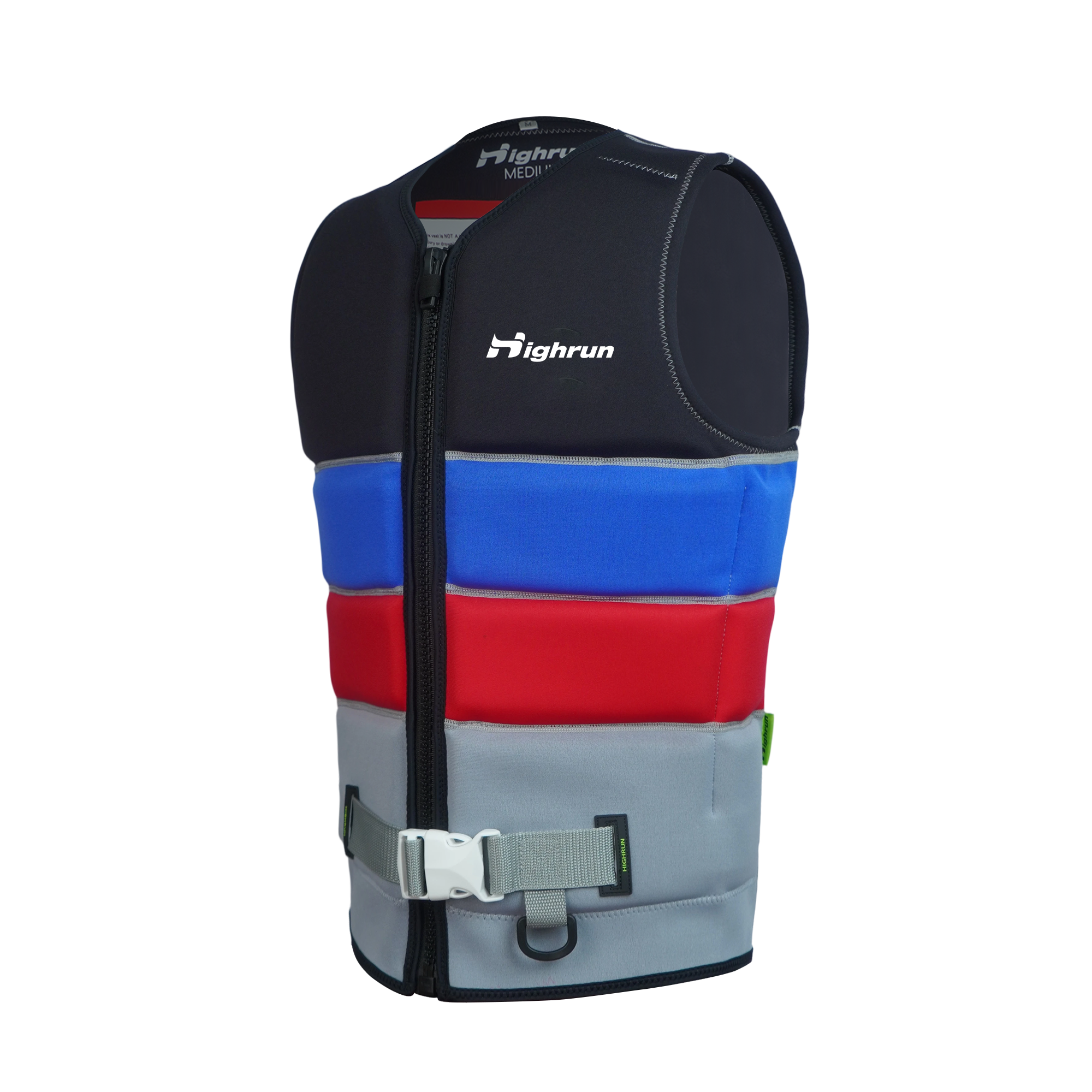
Procuring a reliable high visibility water safety vest requires balancing structural performance and long-term durability. Fleet managers must carefully weigh several material trade-offs.
Vibrant colors face an aggressive enemy: ultraviolet radiation. Constant sun exposure inevitably fades fluorescent dyes. This UV degradation represents a major challenge for multi-season lifespans. A faded vest loses its primary safety advantage. You must evaluate different shell materials carefully to combat this fading.
High-frequency rental fleets demand tough fabrics. Commercial operators typically choose between nylon, polyester, and neoprene. Nylon offers excellent abrasion resistance but fades relatively quickly. Polyester holds vibrant dyes much longer under intense UV exposure. Neoprene provides superior comfort but often comes at a higher unit cost. You must select the right shell material for your water sports safety gear based on your specific environmental conditions.
Material Type | UV Fade Resistance | Abrasion Resistance | Ideal Fleet Application |
|---|---|---|---|
Nylon (200D - 400D) | Low to Moderate | High | Heavy use in shaded or indoor water parks |
Polyester (300D+) | High | Moderate to High | High-sun exposure open water programs |
Neoprene | Moderate | Moderate | Premium rentals requiring high user comfort |
Low-light environments mandate specialized safety features. A proper reflective life vest dramatically improves spotting distances at dawn or dusk. Reflective materials bounce light directly back to its source. This makes the wearer highly visible to searchlights or boat headlamps.
You must ensure your vests utilize SOLAS-grade reflective tape. SOLAS (Safety of Life at Sea) represents the highest maritime standard for reflectivity. Manufacturers must place this tape strategically on the shoulders and upper back. These areas consistently remain above the waterline. Tape placed too low on the torso becomes useless once the user enters the water.
Best Practice: Inspect reflective panels monthly. Saltwater and chlorine can degrade reflective coatings over time.
Common Mistake: Relying on standard silver piping instead of certified SOLAS-grade retroreflective patches.
Fleet operators primarily stock Type III flotation devices. Type III vests are inherently buoyant and provide exceptional mobility. They allow unrestricted arm movement for kayaking, sailing, and paddleboarding. However, they carry specific limitations.
You must set transparent expectations about Type III capabilities. They provide excellent flotation for conscious users in calm, inland waters. They will not reliably turn an unconscious wearer face-up. Instructors must understand this limitation. If your program operates in rough, offshore environments, you may need to upgrade specific groups to Type I or Type II devices for adequate righting moments.
Managing diverse user groups presents massive logistical challenges. A single afternoon might see toddlers, teenagers, and adult instructors on the water simultaneously. Your gear inventory must accommodate everyone safely.
Outfitting different body types requires a standardized approach. You need a comprehensive adult and kids life vest fleet. Distinct, easily identifiable sizing ranges speed up the outfitting process. We recommend using color-coded sizing straps. For example, red straps might indicate adult large, while blue straps indicate youth sizes. This visual system prevents dangerous sizing mix-ups during busy rental rushes.
Program guides and instructors require different tools than standard participants. They often wear a specialized rescue swim vest. These are typically Type V devices tailored for swiftwater or specialized rescue operations.
These professional vests include critical safety features. Quick-release tether systems allow instructors to detach from dangerous entanglements. Integrated radio pockets keep communication lines open. Enhanced armhole cutouts provide maximum range of motion for swimming and towing distressed participants. Equipping your staff with these specialized tools empowers them to handle emergencies effectively.
A highly visible vest fails if it does not fit properly. A poorly fitted vest creates severe secondary panic risks. If a vest rides up around a user's neck in cold water, it restricts breathing. This physical restriction rapidly induces panic, complicating the rescue effort.
You must enforce standard operating procedures for sizing. Staff should conduct the "pull-up test" before any participant approaches the water. Here is the correct procedure:
Ask the participant to put on the vest and buckle all clips securely.
Instruct them to tighten all straps, starting from the waist and working upward.
Stand behind the participant and grasp the shoulder straps firmly.
Pull upward with moderate force.
If the vest slides up past the participant's chin or ears, it is too large. Have them size down immediately.
Building a durable fleet starts with smart procurement. Sourcing commercial safety equipment requires intense scrutiny. You cannot afford to compromise on regulatory compliance or structural integrity.
Validating certifications serves as your first defense. Always verify USCG, Transport Canada, or CE ISO approval stamps. Request the official Declaration of Conformity from the manufacturer. You must actively warn your procurement team against uncertified "buoyancy aids." Discount wholesale platforms frequently sell these products. They masquerade as life-saving devices but fail entirely under commercial stress testing.
Operational efficiency often hinges on customization. Partnering with a reputable custom life vest supplier simplifies fleet management. They can print program logos, asset tracking numbers, and "Instructor" designations directly onto the shell. Crucially, a certified supplier performs these modifications without compromising the structural integrity or voiding the regulatory warranty.
When evaluating pricing, shift your focus from unit price to long-term value. Examine the seasonal longevity of the gear. Factor in UV resistance ratings and mold-resistant foam technologies. Review the supplier’s warranty terms closely. A slightly higher upfront investment in durable, UV-resistant polyester saves thousands in premature replacement costs over three seasons.
Follow this three-step action plan to secure the best fleet equipment:
Request Spec Sheets: Ask potential suppliers for detailed material specifications, including foam density and fabric denier ratings.
Order a Sample Run: Purchase a small batch of vests for your instructor team to field-test in actual water conditions.
Audit the Replacement Policy: Clarify the supplier's defect replacement policy. Ensure they handle warranty claims swiftly to prevent fleet shortages mid-season.
Safer water sports programs rely on a strict matrix of deliberate decisions. You must combine high-visibility materials, accurate sizing protocols, and verified regulatory compliance. A bright, contrasting vest dramatically reduces the time it takes to spot a swimmer in distress. This operational advantage acts as your primary safeguard against escalating emergencies.
However, simply purchasing the right gear is not enough. Implementation remains critical. A high-visibility vest only protects your participants if staff rigorously enforce adoption and conduct routine pull-up tests. You must also implement strict maintenance and storage protocols to prevent UV degradation and extend fleet longevity.
Take action today to secure your program. We prompt all program directors, camp managers, and fleet operators to conduct an immediate audit of their current safety inventory. Identify faded, non-compliant, or ill-fitting gear. Request updated compliance documentation from your current vendors. Do not hesitate to contact a specialized supplier to conduct a comprehensive fleet assessment before your next busy season begins.
A: Fading timelines depend heavily on material and storage. Nylon fades noticeably within one intense summer season under direct UV exposure. Polyester maintains vibrancy for two to three seasons. To extend lifespan, always rinse vests with fresh water and store them in shaded, well-ventilated areas away from direct sunlight.
A: Yes, but you must exercise caution. Modifying a certified vest yourself can void its USCG or ISO approval. You should always have the manufacturer or a certified supplier apply logos. They use approved inks and processes that do not degrade the shell fabric or compromise buoyancy.
A: Shift your focus from years-owned to condition-based replacement. A commercial vest usually lasts three to five years. Retire vests immediately if you notice compressed or crumbling foam, brittle plastic buckles, torn fabric, or severely faded colors that compromise visibility. Regular visual inspections are mandatory.
A: While not strictly mandatory for daytime use, reflective panels provide crucial liability protection. Sudden weather shifts, heavy overcast conditions, or unexpected delays can quickly turn a daytime session into a low-light emergency. Reflective tape ensures maximum visibility regardless of unpredictable environmental changes.


